
Creativity as a Practice
Notes on recapturing wonder

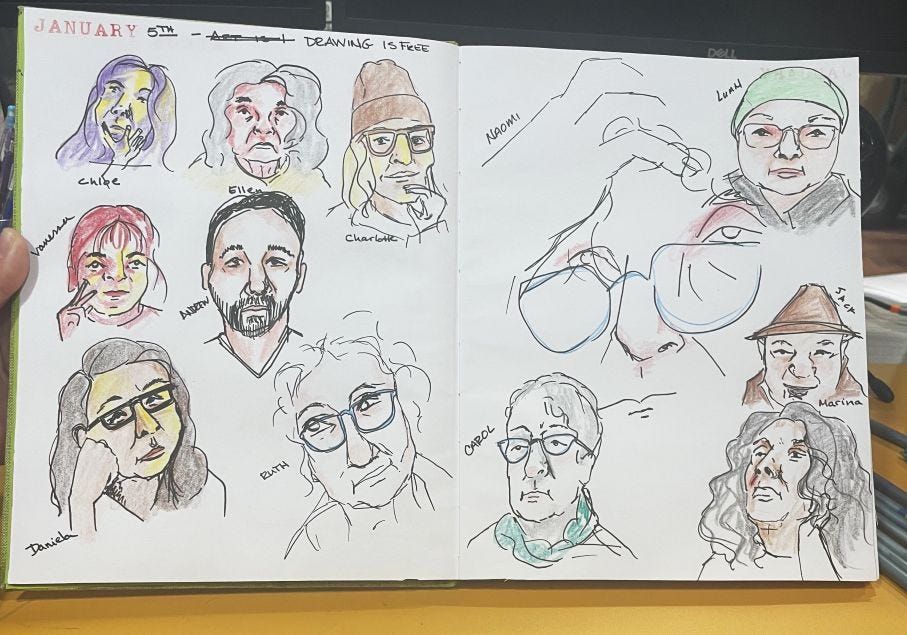
For the last 6 months or so I’ve been working on my creative practice. I’ve listened to and read a dozen books about art and creativity. I’m halfway through the 12-week practice from The Artist’s Way and recently started reading Rick Rubin’s The Creative Act. If you’re an artist, creative, someone who just likes coming up with ideas, or just have any level of interest in understanding your own creativity better, I recommend going on this deep dive.
While reading The Creative Act, it’s become clear to me that pretty much everyone has just about the same thing to say about creativity. It’s illuminating and feels deeply true.
Here’s the TLDR of it (in no particular order):
1. There is some universality in the creative experience and process that suggests a central (or even all-encompassing) source of creative energy. Some people call it God, or a muse; Rubin calls it The Source. But whatever it is, it’s where creative ideas come from and they sort of swirl about looking for a human to transmit them (see Elizabeth Gilbert). I appreciate Rubin’s use of The Source, so that’s what I’m using moving forward here.
2. All humans (and maybe some nonhuman animals?) are creative. Even if you don’t think of yourself as creative or an artist, you are.
3. The work of an artist is to be receptive to the signal from The Source and bring that signal to form in a way that other humans can interact with it. This is art.
4. But the signal can be hard to receive for myriad reasons—negative stories we tell ourselves, distractions of modernity, personal health, or life stage.
5. In order to receive the signal, the artist must develop a practice that primes their receptors and then supports their transmission (am I taking this radio analogy too far?).
6. Developing a practice is about getting into a state that helps the artist pay attention and drop their filters and assumptions, returning to a state of wonder native to children. Children don’t yet have the filters and censors that adults have and are unencumbered in expressing themselves or from noticing—as anyone who has taken a half-hour walk around the block with a 3-year-old knows.
7. The Source doesn’t send out a signal all the time, so you have to show up every day in your artistic practice. For some that includes meditation, walks in nature, consuming art, practicing your craft daily. The most important part is that you’re showing up even when you don’t feel like it. You’re putting in the reps. You’re tuning your receptors, perceiving the world outside you and within you, so that when it does show up you’re ready to grab it.
8. Also, it’s totally fine to copy, steal, and reinterpret what others have done before you, and in fact it’s a good thing. It’s not plagiarizing if you credit your sources, and it’s through copying others that you can start to learn your own style—thanks Austin Kleon for that one.
Recapturing the Wonder
I’m reflecting on these lessons and how I’m working on my daily creative practice when I was treated to an object lesson by my son this morning.
A winter storm has descended on Texas and my very active 9-year-old is stuck inside. He is determined to make abuelita Mexican hot chocolate and I begrudgingly agree to be sous chef. He’s making whipped cream and adds a splash of vanilla extract to the white cream. Amber vanilla fans out across the cream’s surface—it branches out, spreading with lacy tendrils, like a tree or coral. I’m reminded of neurons.
He gasps.
He’s completely captivated. He begs me to take a picture. I grab his tablet so he can take his own picture and keep it close. He gets very quiet and still. He takes a breath and pushes the button. “It’s magic,” he whispers as he captures the image on his rainbow tablet.
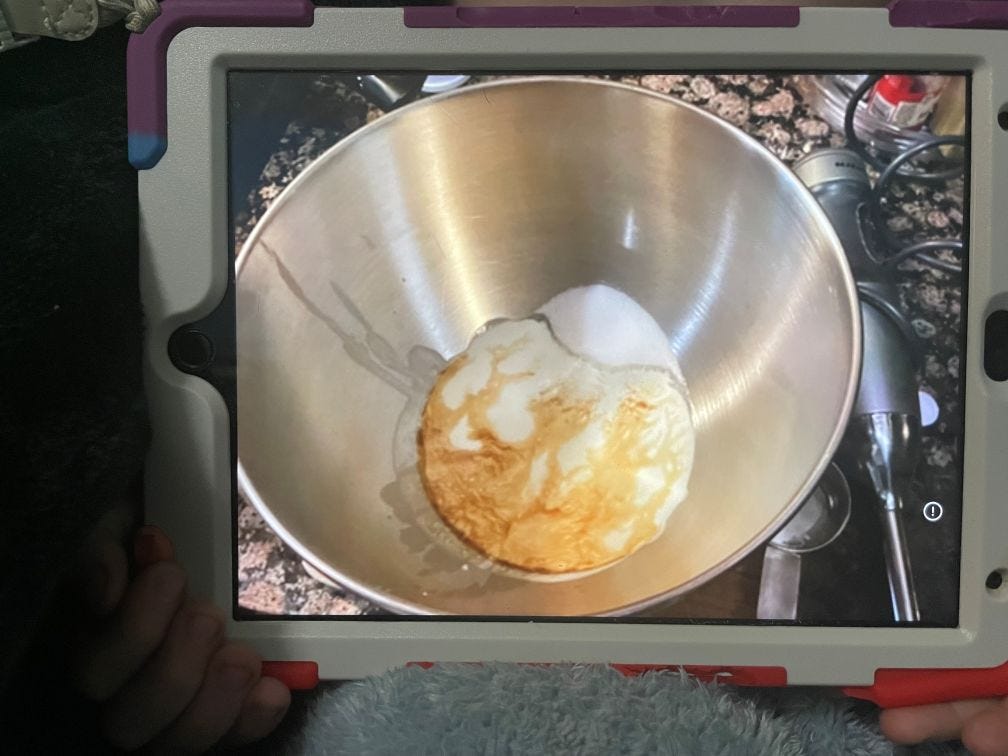
This wonder comes to him so naturally. He’s not embarrassed. He’s not jaded. He’s enthralled. And he’s already 9 years old. I feel like by the time I was 9 I was already blasé and jaded about things like this. But this is exactly the kind of wonder and noticing I’m attempting to recapture now. Every day I try to show up, I write my morning pages, I do my little sketching. Sometimes I do speed portraits. Every day this practice is attempting to excavate my receiver, removing the years of judgment and distraction, all in the hopes that I can see the magic of vanilla in cream.
What I’ve been reading
Here are the books that have influenced my creative practice last year (in no particular order).
The Artist’s Way, by Julia Cameron
The Good Life by Robert Waldinger M.D. and Marc Schulz Ph.D
We Need Your Art by Amie McNee
The Art of Gathering by Priya Parker
Catching the Big Fish by David Lynch
Creative Quest by Questlove
Big Magic by Elizabeth Gilbert
The Steal Like an Artist Audio Trilogy by Austin Kleon
Everything is Figureoutable by Marie Forleo